Black Mold Removal in Perris, CA
You've heard the scary stories about black mold. Here's what we'll give you instead: the CDC-accurate facts, full-containment removal per the S520 standard, and straight answers about what's actually in your home.
- CDC-accurate health information — never fear-based selling
- Full containment + negative air on every black-mold job
- Lab identification so you know exactly what you're dealing with
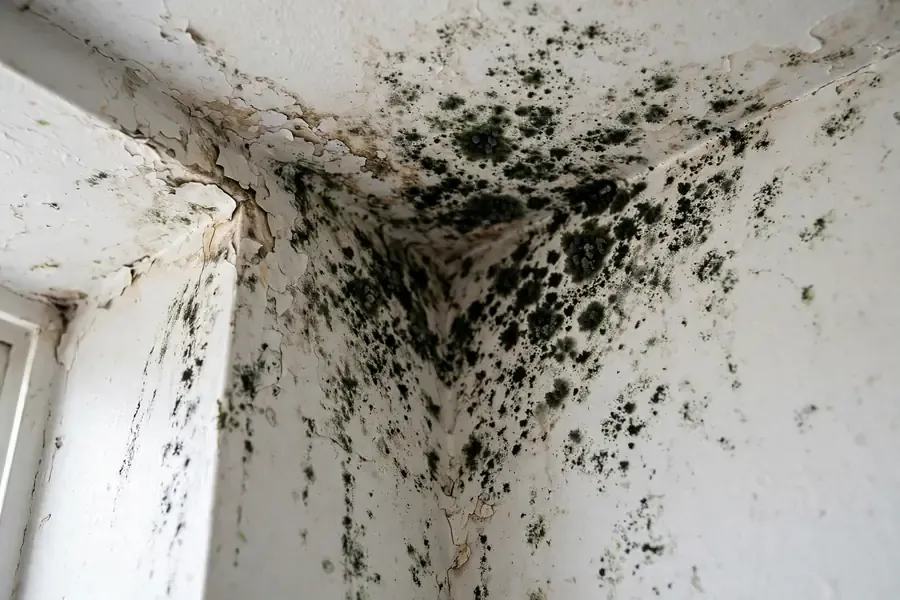
Black Mold in Perris, CA — Facts First
The CDC-accurate answer, up front: no study has proven a direct link between Stachybotrys chartarum — so-called "black mold" — and specific illnesses. But damp indoor environments do worsen allergies, asthma, and respiratory problems, especially for children, the elderly, and anyone immunocompromised. Both of those things are true at the same time, and any company that tells you only one of them is selling you something.
Here's what "black mold" actually means. Stachybotrys is one mold genus among many — Aspergillus, Penicillium, Alternaria, and Cladosporium are all common in Perris homes too. It grows on cellulose-rich materials (drywall paper, wood, particleboard) that have stayed wet for an extended time — the classic case is drywall behind a slow plumbing leak or under a chronically leaking roof. It's dark greenish-black and slimy when wet, which is why it photographs so dramatically. But color alone doesn't identify it: plenty of harmless molds look black, and Stachybotrys itself doesn't always look black. Anyone diagnosing genus by eyeball is guessing.
Where do we find it in Perris? The pattern is consistent: behind walls in the mid-century bungalows around D Street, where old galvanized and copper plumbing develops slow pinhole leaks inside wall cavities; under sinks and dishwashers where particleboard cabinet boxes have been quietly soaking; in attics after a winter of roof leaks went unnoticed; and in mobile homes around Rancho Caballero and the Lake Perris area, where thin walls and older roofs let moisture reach cellulose materials fast. In every case, the story is the same: chronic moisture plus time plus cellulose. Find the water, and you've found why it's there.
We're Perris Mold Pros. We treat every mold — black, green, white, or otherwise — seriously and remove it under full S520 containment. What we won't do is use the words "toxic black mold" to frighten you into a bigger invoice. If you want the scary version, plenty of companies will give it to you. If you want the truth and a proper remediation, call (951) 484-2620.
How We Handle Black Mold Jobs
Same S520 discipline as every remediation — with identification added up front.
Identification
Tape-lift or bulk sampling identifies the genus — so we (and you) know whether we're dealing with Stachybotrys, Aspergillus, or something else entirely. No eyeball diagnoses.
Moisture-source location
Black mold means chronic moisture. We trace it: the pinhole leak, the roof failure, the condensation line, the slab-edge wicking. The colony is the symptom; the water is the disease.
Full containment
Poly barriers and HEPA-filtered negative air seal the work area. Stachybotrys colonies are disturbed as little as possible before containment is verified — this is non-negotiable.
Physical removal
Colonized porous materials are removed and bagged under containment. Structural wood is HEPA-sanded or cleaned; everything remaining is HEPA-vacuumed and treated.
Verification
Visual clearance, moisture readings normalized, and independent lab clearance when warranted — documented, so you have proof, not promises.
Is Black Mold Actually Dangerous?
The honest, CDC-accurate answer: no study has proven that Stachybotrys causes specific illnesses. What the research does show is that damp indoor environments — the conditions that grow Stachybotrys — worsen allergies, asthma, and respiratory symptoms, with the highest risk for children, the elderly, pregnant women, and the immunocompromised. Treat it seriously; don't let anyone terrorize you with it.
Let's talk about what the scare stories get wrong. You've probably read that black mold causes everything from memory loss to organ failure. Those claims come from case reports and lawsuits, not from controlled science — and the CDC and National Academies reviews have consistently found the evidence linking Stachybotrys to specific diseases to be inadequate. What is well established: people in damp, moldy buildings report more respiratory symptoms, asthma exacerbations, and allergy problems. The practical takeaway doesn't change either way — the mold needs to come out, the moisture needs to be fixed, and the work needs containment. Fear doesn't remediate anything; process does.
Can I clean black mold myself with bleach?
For a small surface spot on tile or glass, careful DIY cleaning is reasonable. For anything else — no, and here's why black mold is the worst candidate for DIY: Stachybotrys grows on porous cellulose materials (drywall paper, wood) where bleach can't reach the roots, and disturbing a colony without containment launches spores through the house. The EPA doesn't recommend bleach as routine practice for mold cleanup on porous materials. The rule of thumb we give Perris homeowners: anything larger than a dinner plate, anything inside drywall or wood, or anything you can't fully see — that's a professional job. Smaller than that, on a hard surface, with gloves and ventilation — that's yours if you want it.
| Situation | DIY or professional? | Why |
|---|---|---|
| Small spot on tile/grout | DIY reasonable | Non-porous surface; roots can't penetrate |
| Spot on drywall or wood | Professional | Roots penetrate porous material; bleach can't reach |
| Anything behind a wall | Professional | Hidden extent unknown; containment required |
| Musty smell, no visible mold | Professional inspection | Hidden colony likely; needs moisture mapping |
| After flooding | Professional | Contamination is widespread; 24–48h clock already running |
Why "toxic mold" is a marketing term, not a medical one
"Toxic mold" isn't a scientific classification — it's a phrase from news coverage and litigation. Some molds, including Stachybotrys, can produce mycotoxins under certain conditions, but the presence of a mold that can produce mycotoxins doesn't mean it's producing them in your home, or that you're being exposed at levels that cause illness. Companies that lead with "toxic black mold" are using a scary label to shortcut your judgment. We'd rather earn your business with the full, accurate picture — which is serious enough without exaggeration. If you want mold inspection and testing in Perris, CA to identify exactly what's growing, we'll do it properly with an accredited lab.
DIY vs. Professional Black Mold Removal
Small surface spots are a weekend job. Everything else isn't.
| DIY | Professional | |
|---|---|---|
| Right for | Tiny spots on tile (under ~10 sq ft), hard surfaces only | Anything on drywall or wood, hidden growth, HVAC involvement, large areas |
| Method that works | Scrubbing plus ventilation — never just bleach on porous material | Containment, physical removal, HEPA filtration, moisture-source fix |
| Health risk | Low for small tile jobs with ventilation | Disturbing large colonies without containment spreads spores through the home |
| Verdict | Fine for a shower-corner spot | Call us for everything else |
Where Mold Hides in Perris Homes
Most of the mold we remediate in Perris isn't the spot you can see — it's the colony behind it. On every job, we check these areas:
Attics
December–February storms exploit aging flashing and tile on Perris’s mid-century roofs. Attic mold is the hidden colony we find most — the musty smell arrives long before any visible spot.
Bathrooms
Failed caulk, slow supply-line drips, and fans that vent into the attic instead of outdoors keep bathrooms damp. Grout and drywall around tubs are the usual starting points.
Kitchens
Under-sink leaks and dishwasher seepage feed mold behind kick-plates for months. Particleboard cabinet boxes in tract and mobile homes wick water and can’t be dried out once swollen.
HVAC & swamp-cooler ducts
Ductwork spreads whatever grows inside it to every room. On older Perris homes, evaporative cooler pads and roof-mounted ducts stay damp all summer — a musty smell when the cooler runs is the tell.
Wall cavities
Pinhole leaks in aging copper and galvanized plumbing feed mold inside walls for months. Bubbling paint, a creeping water bill, or an earthy smell in one room are the early warnings.
Slab edge & flooring
Expansive clay swells with winter rain and shrinks in summer heat, stressing slabs; heavy irrigation against the foundation adds moisture. It wicks up exactly where baseboards and drywall meet the floor.
Related Mold Services in Perris, CA
Mold Remediation
Full containment-based removal per the ANSI/IICRC S520 standard. Our flagship service.
Mold Remediation in Perris, CAMold Inspection & Testing
Visual inspection, moisture mapping, and lab-backed sampling — only when it's actually needed.
Mold Inspection & Testing in Perris, CABathroom Mold Removal
Grout, caulk, ceilings, and exhaust fans — the bathroom mold Perris humidity keeps bringing back.
Bathroom Mold Removal in Perris, CAFAQs — Black Mold Removal — Perris, CA
Straight answers, no scare tactics.
Here's the CDC-accurate answer: no study has proven a direct link between Stachybotrys ('black mold') and specific illnesses. What is well established is that damp indoor environments worsen allergies, asthma, and respiratory problems — especially for children, the elderly, and the immunocompromised. We treat every mold seriously and remove it under full containment; we just don't use scare tactics to sell the job.
You can't tell by looking — color alone doesn't identify genus, and plenty of harmless molds look black. Proper identification requires tape-lift, swab, or bulk sampling analyzed by an accredited lab. Anyone diagnosing Stachybotrys by eyeball is guessing.
Small spots on hard, non-porous surfaces (tile, glass) can be a careful DIY job. Anything on drywall, wood, or other porous materials — where bleach can't reach the roots — or anything hidden behind walls, belongs to a professional with containment. Disturbing a colony without containment spreads spores through the house.
On non-porous surfaces, bleach can kill surface mold. On porous materials like drywall and wood — where Stachybotrys actually grows — bleach doesn't reach the roots, and the EPA doesn't recommend it as routine practice for mold cleanup. Physical removal under containment is the correct approach.
Chronic moisture on cellulose-rich materials: slow plumbing leaks inside walls (common in Perris's mid-century homes with old copper/galvanized pipes), long-term roof leaks into attics, and persistent condensation. Stachybotrys needs extended wetness — it's a sign of a moisture problem that's been going on for a while, which is why finding the water source is half the job.
Under the right conditions — sustained moisture on drywall or wood — visible colonies can develop within one to two weeks of the initial 24–48 hour germination window. The real timeline that matters is the moisture's: a pinhole leak that's been dripping for six months has been feeding mold for six months.
The color of the mold doesn't change the insurance question — what matters is what caused the moisture. California policies typically cover mold remediation following a sudden, covered event (burst pipe, storm damage) but not slow leaks or neglected maintenance, usually with a $5,000–$10,000 mold sublimit. Document everything with photos before cleanup.
Testing makes sense when the mold is hidden (you smell it but can't find it), for real-estate transactions, or for post-remediation clearance verification. If you can see the colony and know the moisture source, lab identification rarely changes the remediation plan — put the money toward proper removal instead.
The commonly reported symptoms are respiratory and allergy-like: sneezing, coughing, itchy or watery eyes, and aggravated asthma. The CDC is careful here — no test has proven Stachybotrys itself causes specific illnesses — but damp indoor environments reliably worsen these symptoms, and infants, the elderly, and immunocompromised people should take exposure seriously.
Only if the moisture source survives. Remediation removes the colony, but if the roof still leaks, the pipe still drips, or the bathroom still has no ventilation, mold returns to the same spot. Every job we do ends with the moisture source identified and addressed — that's what makes removal permanent.
Think You've Got Black Mold? Get Facts, Not Fear.
We'll identify what's actually growing in your home, explain what it means in plain English, and remove it properly under containment. Serving Perris, Moreno Valley, Menifee, Hemet, and San Jacinto.
- Perris-based — 580 Coliseum St, Perris, CA
- Containment-based process per the S520 standard
- Honest testing guidance — no upsells
Request a Free Quote
Tell us what you're seeing — we'll get back to you shortly.